HENAN YUMO: Engineered Precision, Uncompromised Performance
Aluminum Oxide (Al₂O₃): The Ultimate Guide to Properties, Production, and Industrial Applications
Discover the essential guide to aluminum oxide. Learn about its key properties, how it's made, different types like white fused alumina, and how to choose the right grade for your industry needs.
10/23/20252 min read
Introduction
Aluminum Oxide, with the chemical formula Al₂O₃, is far more than just an abundant mineral; it is a cornerstone of modern engineering. From the gemstone in a luxury watch to the abrasive that shapes metal, and from the ceramic component in electronics to the catalyst in a chemical reactor, its versatility is rooted in fundamental materials science. This guide delves into the core properties, production processes, and practical criteria for selecting the optimal aluminum oxide for your application.
Core Properties That Define Aluminum Oxide
The value of aluminum oxide stems from a unique combination of physical and chemical properties:
High Hardness & Wear Resistance: With a Mohs hardness of 9, it is second only to diamond and silicon carbide, making it an ideal choice for wear-resistant parts and high-performance abrasives.
Excellent High-Temperature Stability: It boasts a melting point of 2054°C and maintains structural integrity under thermal stress, a key property for advanced refractories.
Superb Chemical Inertia: It exhibits outstanding resistance to most acids, alkalis, and corrosive environments, ensuring longevity in demanding applications.
High Electrical Insulation: In its pure form, it is an excellent electrical insulator, widely used in electronic substrates and spark plugs.
The Primary Production Process: From Bauxite to Alumina
The industrial-scale production of aluminum oxide is predominantly achieved through the Bayer Process. This refined procedure can be summarized as follows:
Digestion: Crushed bauxite ore is mixed with a concentrated sodium hydroxide solution at high temperature and pressure, converting the aluminum oxide in the ore into sodium aluminate.
Clarification: The insoluble residue (red mud) is separated and removed, yielding a purified sodium aluminate solution.
Precipitation: The solution is cooled, agitated, and seeded with aluminum hydroxide crystals to promote crystallization.
Calcination: The aluminum hydroxide is heated at high temperatures to drive off water, resulting in a sandy, white aluminum oxide powder suitable for various industries.
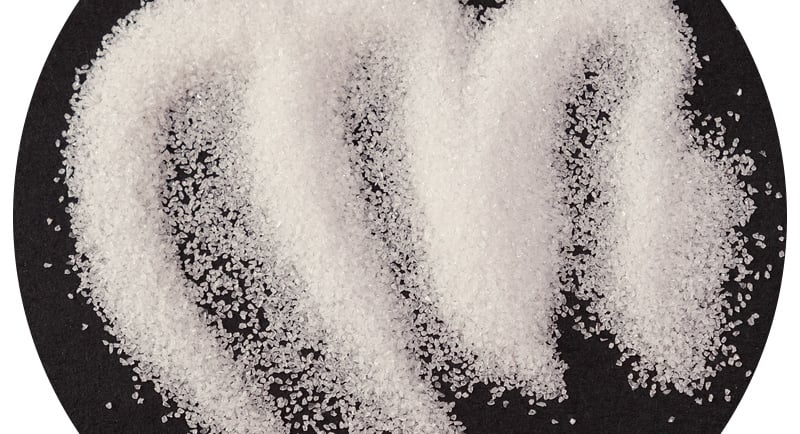
For high-end abrasives like White Fused Alumina, this powder is further processed in an electric arc furnace above 2000°C. The melt is then cooled, forming a high-purity crystalline mass, which is subsequently crushed, milled, and screened into various grit sizes.
Classification & Selection Guide
Aluminum oxide is categorized based on purity, crystal phase, and sintering degree to meet specific industrial requirements.
Insights from Henan Yumo New Materials Co., Ltd.
Selecting the right aluminum oxide product hinges on matching its physical and chemical specifications to the end-use. For instance, in refractories, bulk density and high-temperature shrinkage are as critical as purity. In abrasive applications, grit size distribution and toughness directly determine cutting efficiency and tool life.
As a enterprise dedicated to the R&D and manufacturing of high-performance abrasives, Henan Yumo New Materials understands that material consistency is paramount for our clients' production lines. Our White Fused Alumina is subject to rigorous quality control from raw material selection to final packaging, ensuring stability in chemical composition and particle size distribution. This provides a reliable foundation for our customers' grinding, polishing, and refractory applications.
Conclusion
Aluminum oxide is a multifunctional material whose potential continues to be unlocked. From the backbone of heavy industry to the cutting edge of technology, it remains a critical enabler. A deep understanding of its properties and production is the first step toward leveraging its full value.
Entering Yumo
Quality abrasive solutions for various industries.
Contact Yumo
E-mail:brian@yumowfa.com
WhatsApp/Wechat:+86 152 2508 9887
© 2025. All rights reserved.