HENAN YUMO: Engineered Precision, Uncompromised Performance

Green Silicon Carbide Micro Powder: An Emerging Material Driving the Development of the Photovoltaic Industry
Green silicon carbide micro powder, with its excellent properties, holds significant potential for application in the photovoltaic industry. With growing market demand and technological advancements, it is expected to play an even more important role in the future photovoltaic industry. Enterprises and R&D institutions should actively explore and enhance the application technologies of green silicon carbide micro powder, fostering the sustainable development of the photovoltaic industry and contributing to the global sustainable utilization of energy. Synergy between material scientists and photovoltaic engineers will be key to unlocking its full potential.
11/12/20254 min read
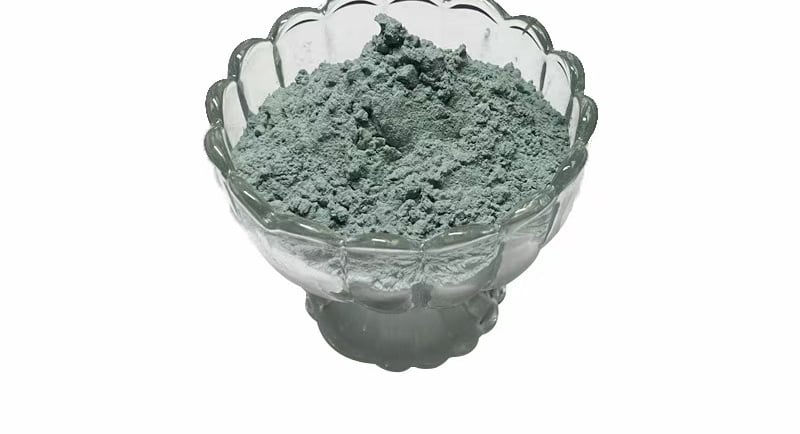
In today's rapidly evolving clean energy sector, the photovoltaic industry, as a vital component of renewable energy, places great importance on technological innovation and material upgrades. Green silicon carbide micro powder, a novel material, is gradually being applied within the photovoltaic industry due to its excellent properties and environmental characteristics, becoming a significant force driving industry progress. This article will explore in detail the properties, production processes, applications within the photovoltaic industry, as well as the challenges and future development trends of green silicon carbide micro powder.
Properties of Green Silicon Carbide Micro Powder
Green silicon carbide micro powder is a hard inorganic material primarily composed of silicon and carbon elements. Its chemical formula is SiC, and its hardness is second only to diamond, possessing exceptional wear resistance, heat resistance, and corrosion resistance. Furthermore, green silicon carbide micro powder exhibits good thermal and electrical conductivity, making it an ideal material for both conduction and heat dissipation.
High Hardness and Wear Resistance: Green silicon carbide micro powder has a Mohs hardness between 9 and 9.5, allowing it to remain stable in high-temperature and high-pressure environments, resisting wear effectively. For the photovoltaic industry, this property significantly enhances the durability of products over extended use.
Excellent Thermal Conductivity: The high thermal conductivity of green silicon carbide micro powder enables it to efficiently dissipate heat from within photovoltaic modules, lowering operating temperatures and thereby improving the efficiency of photovoltaic cells. This characteristic is particularly crucial for maintaining performance in high-insolation regions and for extending the service life of components by mitigating thermal degradation.
Chemical Stability: This material maintains good stability in various acid and alkali environments, resisting corrosion from chemical substances, which prolongs the service life of photovoltaic components. Its inertness makes it suitable for use in diverse climatic conditions without significant degradation.
Environmental Performance: The production process of green silicon carbide micro powder is relatively environmentally friendly, generating no harmful substances. It is ecologically benign, aligning with current sustainable development trends. The material itself is non-toxic and can be recycled in certain applications, further enhancing its environmental profile.
Production Process of Green Silicon Carbide Micro Powder
The production of green silicon carbide micro powder primarily involves the high-temperature arc furnace method, using quartz sand and carbonaceous materials (such as petroleum coke) as raw materials for a reduction reaction. The main steps of this process are as follows:
Raw Material Preparation: High-purity quartz sand and high-quality carbonaceous materials are mixed in a specific ratio to ensure stable raw material quality. Impurities are strictly controlled to achieve the desired purity in the final product.
High-Temperature Arc Furnace Reaction: The mixed raw materials are placed in a high-temperature arc furnace and heated above 2500°C. The intense heat of the electric arc facilitates the reaction between silicon from the quartz sand and carbon, forming green silicon carbide. Precise temperature control and furnace atmosphere are critical for determining the crystal structure and quality of the resulting SiC.
Cooling and Crushing: After the reaction is complete, the furnace charge is cooled to room temperature and then crushed into silicon carbide micro powder of various particle sizes using mechanical equipment like jaw crushers and roller crushers.
Classification and Packaging: The crushed powder is classified and screened to separate products of different particle sizes, followed by packaging for sale. Advanced classification techniques, such as air classification or sieve analysis, ensure precise particle size distribution tailored for specific applications, such as the stringent requirements for slurries in photovoltaic wafer slicing.
This production process not only ensures the purity and quality of green silicon carbide micro powder but also effectively controls production costs and improves efficiency.
Applications of Green Silicon Carbide Micro Powder in the Photovoltaic Industry
The application of green silicon carbide micro powder in the photovoltaic industry is mainly reflected in the following areas:
Conductive Material for Photovoltaic Cells: As an additive in conductive materials, green silicon carbide micro powder can significantly enhance the electrical conductivity of photovoltaic cells, improving their energy conversion efficiency. Through proper formulation and use, it can boost the overall performance of photovoltaic cells, potentially reducing resistive losses.
Anti-Reflective Coating: On the surface of photovoltaic modules, green silicon carbide micro powder can be used as part of an anti-reflective coating to reduce light reflection loss and increase light absorption, thereby improving the power generation efficiency of the modules. Its optimal refractive index contributes to better photon management.
Thermal Management Coatings: Since photovoltaic modules are prone to excessive temperatures during prolonged operation, the excellent thermal conductivity of green silicon carbide micro powder makes it a high-quality thermal interface material or filler in thermal management coatings, effectively reducing operating temperatures and extending service life.
Reinforcement for Composite Materials: Combining green silicon carbide micro powder with other materials can produce higher-strength composites. For instance, it can be used in high-strength composite materials for photovoltaic mounting structures, enhancing the durability and safety of photovoltaic equipment. Its high hardness also improves the wear resistance of these composites.
Filler and Insulator: Within photovoltaic modules, green silicon carbide micro powder can serve not only as a filler to improve mechanical properties and reduce costs but also provide good electrical insulation, preventing current leakage and ensuring a safe operating environment for the modules. Its thermal conductivity again aids in heat dissipation in this role.
Challenges and Future Development Trends
Although the application prospects of green silicon carbide micro powder in the photovoltaic industry are broad, it still faces some challenges:
Production Costs: Currently, the production cost of green silicon carbide micro powder is relatively high. Further optimization of the production process is needed to reduce overall costs and enhance market competitiveness. Research into energy-efficient furnace designs and alternative synthesis methods is ongoing.
Market Awareness: As an emerging material, market awareness of green silicon carbide micro powder still needs improvement. Increased promotion and education within and outside the industry are necessary to build user trust and familiarity. Case studies and demonstrative projects can be beneficial.
Technical Research and Development: Tailoring the properties of green silicon carbide micro powder, such as particle size distribution, surface chemistry, and purity, for specific photovoltaic products (e.g., different cell architectures like PERC, HJT, or TOPCon) is an important direction for future development. Research into nano-sized SiC and its applications also holds promise.
In the future, with the continuous development of the photovoltaic industry and technological innovation, green silicon carbide micro powder is destined to occupy an increasingly important position in the photovoltaic field. The application of new materials will drive performance improvements in photovoltaic products, contributing to the widespread adoption of global renewable energy. As economies of scale are achieved and technology advances, its cost-effectiveness is expected to improve further.
Entering Yumo
Quality abrasive solutions for various industries.
Contact Yumo
E-mail:brian@yumowfa.com
WhatsApp/Wechat:+86 152 2508 9887
© 2025. All rights reserved.