HENAN YUMO: Engineered Precision, Uncompromised Performance
The Comprehensive Guide to White Fused Alumina Micro Powder: Properties, Production, and Precision Applications
What is white fused alumina micro powder? This guide covers high-purity WFA (Al₂O₃≥99.5%), its properties, and uses in polishing & refractories. Get a custom quote and free sample from manufacturer YUMO Abrasives.
12/25/20256 min read
Introduction: What is White Fused Alumina Micro Powder?
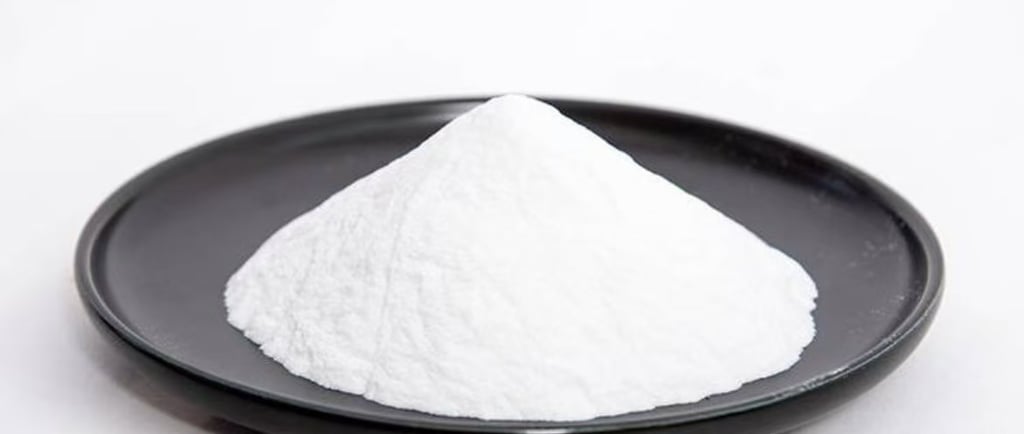
White Fused Alumina (WFA) Micro Powder is a premium, synthetic abrasive material created through the electric arc furnace fusion of high-purity alumina raw materials, followed by precision crushing, milling, and classification into fine and ultra-fine powders. Characterized by its brilliant white color, this material typically boasts an alumina (Al₂O₃) content of 99.5% or higher, placing it among the purest forms of manufactured abrasives. Its exceptional hardness (9.0 on the Mohs scale, second only to diamond and silicon carbide), combined with sharp, self-sharpening angular grains, makes it an indispensable tool in industries demanding precision, consistency, and superior surface finishes.
From refining the pristine surface of smartphone glass to forming the resilient matrix of advanced refractory linings in steel furnaces, WFA micro powder operates at the intersection of microscopic engineering and macroscopic industrial performance. This guide serves as an authoritative resource for engineers, procurement specialists, and application developers seeking to understand, select, and optimally utilize this versatile material to solve complex manufacturing challenges and enhance product quality.
Chapter 1: The Science of Production – From Raw Ore to Precision Powder
The journey to producing consistent, high-performance white fused alumina micro powder is a meticulously controlled process where precision dictates quality.
1.1 Raw Material Selection and Fusion
The process begins with high-grade raw materials, primarily calcined alumina. This material is fed into a powerful electric arc furnace, where temperatures soar above 2,000°C. In this intense heat, the alumina melts and undergoes a transformative process. Impurities are volatilized, and upon controlled cooling, a crystalline mass of pure, dense alpha-alumina (α-Al₂O₃) crystals is formed. This "fused" block is the genesis of all white fused alumina products. The high purity of the initial feedstock directly correlates to the final product's chemical inertness and performance stability. (To understand the fundamental material, you can refer to the entry on Aluminium Oxide on Wikipedia).
1.2 The Precision Size Reduction Journey
Transforming the fused mass into a uniform micro powder is a multi-stage operation of crushing and classification:
Primary and Intermediate Crushing: The fused alumina blocks are progressively reduced in size using jaw crushers, roll crushers, and hammer mills.
Fine and Micro-Grinding: This is the core stage determining final particle morphology.
Ball Milling: Grinding in rotating mills with steel or ceramic balls.
Attrition Mills and Jet Mills (Fluid Energy Mills): These are preferred for high-purity micro powders. Jet milling allows for contamination-free grinding, precise particle size control, and can produce powders with a more uniform shape—ideal for certain polishing applications.
Precision Classification: The ground powder is fed into classifiers—most commonly air classifiers. These devices use controlled airflows to separate particles based on their size and mass. This step is critical for achieving the narrow, tightly controlled particle size distributions (PSD) required for precision applications. Sophisticated multi-stage classifiers can produce standard grit sizes from F220 (approx. 63 µm) down to F2000 (approx. 3 µm) and beyond, adhering to international standards such as those defined by the Fédération Européenne des Fabricants de Produits Abrasifs (FEPA).
1.3 Quality Assurance and Control
Every batch of micro powder must pass rigorous testing to ensure lot-to-lot consistency.
Laser Diffraction Particle Size Analysis: The primary tool for defining the PSD curve.
Chemical Analysis (XRF): Verifies the alumina purity and traces impurity levels.
Scanning Electron Microscopy (SEM): Provides visual analysis of particle morphology.
Specific Surface Area (BET) Analysis: Measures the powder's fineness and reactivity.
Chapter 2: Decoding Technical Specifications – The Key to Performance
Understanding the data sheet is crucial for matching the powder to your application.
PropertyTypical SpecificationImpact on Application PerformanceChemical CompositionAl₂O₃: ≥ 99.5%Dictates purity, chemical resistance, and suitability for high-temperature or corrosive environments.Grit Size / PSDF230, F400, F800, F1200, F2000Directly controls material removal rate and final surface roughness (Ra). A narrower distribution yields a more predictable, uniform finish.Mohs Hardness9.0Defines the abrasive's intrinsic cutting ability and wear resistance.Crystal FormAlpha-Alumina (α-Al₂O₃)The stable, dense phase offering excellent thermal and chemical stability.True Density~3.95 g/cm³Important for formulating stable slurries/suspensions in wet polishing and blasting applications.Magnetism< 0.05% (typically)Critical for applications where ferrous contamination is unacceptable, such as in semiconductor processing.
A Note on Particle Morphology: Beyond size, the shape of the particles is a performance driver. Angular grains are aggressive cutters ideal for rough grinding. More rounded or "milled" grains provide a gentler, scratch-free finish perfect for final polishing. Reputable suppliers like YUMO Abrasives can provide powders tailored to specific morphology needs.
Chapter 3: The Application Landscape – Where WFA Micro Powder Excels
3.1 Superfinishing and Precision Polishing
This is the domain where WFA micro powder's purity and consistency are paramount.
Optical and Semiconductor Industries: Used in slurries for polishing sapphire glass, silicon wafers, and other critical substrates.
Metalworking: Achieves mirror finishes on stainless steel, titanium alloys, and high-value tool steels.
Automotive and Aerospace: For finishing critical components like fuel injection nozzles and turbocharger blades.
3.2 High-Performance Refractories and Ceramics
Here, WFA acts as a high-purity structural component.
Refractory Castables and Gunning Mixes: WFA micro powder acts as a matrix densifier. It fills voids between larger grains, improving packing density, which leads to increased strength, reduced porosity, and enhanced resistance to slag penetration and thermal shock in furnace linings. (For an in-depth look at refractory technology, the Refractories Institute provides valuable industry resources).
Advanced Technical Ceramics: Serves as the primary raw material for high-alumina ceramics. The fine particle size increases sintering activity, allowing for denser ceramic bodies. The American Ceramic Society offers extensive resources on ceramic materials and processing.
3.3 Surface Preparation and Functional Coatings
Abrasive Blasting: As a blasting media, WFA micro powder offers a sharp, fast-cutting alternative to sand or slag. It creates a clean, anchor-profile surface ideal for coating adhesion.
Thermal Spray Coatings: WFA powder is used to create wear- and corrosion-resistant coatings on metal components via plasma or HVOF spraying.
3.4 Emerging and Specialized Applications
Additive Manufacturing (3D Printing): Investigated as a component in ceramic-filled resins or as a sintering feedstock.
Reinforcement and Functional Fillers: Incorporated into composites to enhance hardness, thermal conductivity, or abrasion resistance.
Chapter 4: A Practical Guide to Selecting Your Supplier
Choosing the right WFA micro powder supplier is a strategic decision impacting product quality and production stability.
Key Selection Criteria:
Technical Expertise and Support: Can the supplier's engineers discuss your application in detail?
Production Consistency and Quality Control: Inquire about their process controls and testing frequency. Certifications like ISO 9001 are a good baseline indicator.
Customization Capability: Can they tailor products for your unique process?
Supply Chain and Logistics Reliability: Ensure they have the production capacity and logistical capability.
Why Partner with a Specialist Manufacturer like YUMO Abrasives?
At YUMO Abrasives, we specialize in the full-spectrum production of white fused alumina and silicon carbide. Our vertical integration means direct control from fusion to final classification. Our in-house laboratory guarantees that every shipment meets its specified grade. We partner with you to optimize your abrasive process, offering samples for testing and developing customized solutions.
Chapter 5: Frequently Asked Questions (FAQ)
Q1: What is the main difference between White Fused Alumina (WFA) and Brown Fused Alumina (BFA)?
A: The key differences are purity and structure. WFA is >99.5% Al₂O₃, making it harder, more brittle (friable), and chemically purer. BFA contains ~95-97% Al₂O₃ with impurities, giving it a tougher structure. WFA is preferred for precision finishing, while BFA is excellent for heavy-duty grinding. (Learn more about the different types of fused alumina).
Q2: Can WFA Micro Powder be used for both wet and dry processes?
A: Absolutely. It is highly effective in both. In wet polishing/lapping, it is suspended in a liquid to form a slurry. In dry processes like precision blasting, its dry flow characteristics are essential.
Q3: How does particle size distribution (PSD) affect my final surface finish?
A: PSD is critical. A powder with a wide PSD may lead to an inconsistent finish. A narrow, tight PSD ensures all particles cut to a similar depth, producing a more uniform, predictable surface roughness (Ra value). For superfinishing, a tight PSD is mandatory.
Q4: Is White Fused Alumina considered a safe material to handle?
A: While chemically inert, WFA micro powder, like any fine particulate, requires careful handling. Inhalation of dust should be prevented using appropriate engineering controls and personal protective equipment (PPE). Always refer to the supplier's Safety Data Sheet (SDS) and guidelines from occupational safety bodies like NIOSH.
Q5: Where can I learn more about international abrasive grain standards?
A: Grit size designations (like FEPA "F" grades) are standardized. The Fédération Européenne des Fabricants de Produits Abrasifs (FEPA) and Japanese Industrial Standards (JIS) are widely adopted.
Conclusion: Partnering for Precision
White Fused Alumina Micro Powder is more than just a commodity abrasive; it is a precision-engineered material that enables innovation and quality across manufacturing sectors.
Ready to Optimize Your Surface Finish or Refractory Formula?
Contact the experts at YUMO Abrasives today. Let our technical team review your application challenges and recommend the optimal white fused alumina micro powder specification. We invite you to request a complimentary sample and a detailed technical datasheet to validate performance in your process.
📧 Contact Us: sales1@yumoabrasive.com
🌐 Learn More & Request a Quote: www.yumoabrasive.com
YUMO Abrasives – Engineering Advanced Abrasive Solutions.
Entering Yumo
Quality abrasive solutions for various industries.
Contact Yumo
E-mail:brian@yumowfa.com
WhatsApp/Wechat:+86 152 2508 9887
© 2025. All rights reserved.