HENAN YUMO: Engineered Precision, Uncompromised Performance
The Ultimate Guide to White Fused Alumina (WFA) Micro Powder: Manufacturing, Properties, and Industrial Applications
Discover the ultimate guide to White Fused Alumina (WFA) Micro Powder by Henan Yumo. Explore technical specs, FEPA/JIS grit sizes, and our advanced 0.1% moisture control technology. Your direct factory source for high-purity abrasives used in precision polishing and semiconductor lapping.
1/15/20268 min read
Introduction: The Precision Power Behind Modern Industry
In the realm of high-performance abrasives, White Fused Alumina (WFA) Micro Powder stands as a pinnacle of purity and precision. As a premier manufacturer, Henan Yumo New Materials has observed a surging global demand for materials that can deliver not just abrasive power, but microscopic accuracy.
Whether it is for the semiconductor wafers that power our smartphones or the high-precision optical lenses used in aerospace, WFA Micro Powder is the invisible hero. In this comprehensive guide, we will explore why WFA is preferred over other abrasives, the intricacies of its manufacturing process, and how to select the right grit size for your specific industrial needs.
Chapter 1: What is White Fused Alumina Micro Powder?
1.1 Defining White Fused Alumina
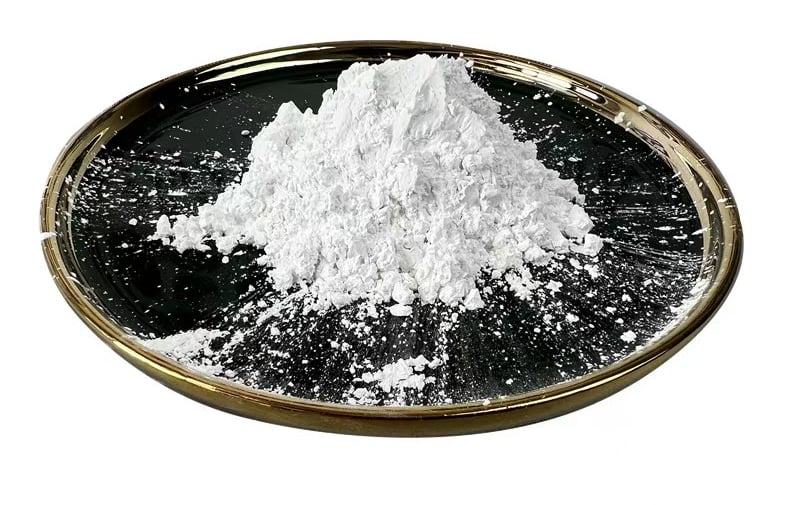
White Fused Alumina, often abbreviated as WFA, is a synthetic mineral produced from the fusion of high-grade industrial alumina (Al2O3) in an electric arc furnace. Unlike Brown Fused Alumina, which contains more impurities like titanium and iron, WFA is characterized by its high purity (typically >99.5), pure white color, and superior hardness.
1.2 The "Micro Powder" Distinction
While "Grit" refers to larger, coarser particles used in heavy-duty grinding, Micro Powder refers to particles that are generally smaller than 53 microns (FEPA F230 or JIS #240 and finer). At Yumo New Materials, our micro powders undergo a specialized Water Suspension (Sedimentation) process to ensure that each grain is uniform and free of oversized particles that could cause scratches during precision polishing.
Chapter 2: Technical Specifications & Chemical Composition
For professional buyers like JSC "LUGA ABRASIVE PLANT" or precision engineering firms in Vietnam, the technical data sheet (TDS) is the most critical document.
2.1 Chemical Purity
Aluminum Oxide (Al2O3): 99.5%
Sodium Oxide (Na2O): 0.2% (Low soda WFA is available for electronic applications)
Iron Oxide (Fe2O3): 0.05%
Silicon Dioxide (SiO2): 0.1%
2.2 Physical Properties
Hardness: 9.0 on the Mohs scale (2200-2300 kg/mm^2 Knoop hardness).
True Density: 3.95 g/cm
Melting Point: 2250℃
Color: Pure White.
Shape: Sharp, angular, and friable (self-sharpening).
Chapter 3: The Yumo Manufacturing Excellence
3.1 Fusion Process
The process begins in a tilting electric arc furnace. At temperatures exceeding 2250℃, the alumina powder melts and re-crystallizes. The cooling rate is strictly controlled to manage the crystal size, which influences the eventual toughness of the micro powder.
3.2 Crushing and Milling
Once the blocks are cooled, they are crushed. For micro powders, we use Ball Milling or Air-flow Milling. Ball milling produces more "blocky" grains, which are excellent for bonded abrasives, while air-flow milling produces "sharp" grains ideal for fast-cutting applications.
3.3 Advanced Moisture Control Technology
As we have discussed with our partners, moisture is the enemy of micro powder. Henan Yumo utilizes an automated vertical drying system that guarantees a moisture content of 0.1%. This ensures that when you open a Jumbo Bag of F1200, the powder flows like water, with zero clumping, making it perfect for automatic slurry mixing systems.
Chapter 4: Standard Grit Sizes and Classification
Navigating the different standards (FEPA, JIS, and W-Series) is essential for global trade.
4.1 FEPA (Federation of European Producers of Abrasives)
Commonly used in Russia and Europe. Standard sizes include F240, F280, F320, F400, F500, F600, F800, F1000, F1200.
4.2 JIS (Japanese Industrial Standards)
The gold standard for Asian electronics and optics. Sizes range from #240 up to #8000. The #8000 powder has an average particle size ($D_{50}$) of approximately $1.2 \pm 0.3$ microns.
4.3 Understanding PSD (Particle Size Distribution)
We use Malvern Laser Analyzers to ensure a "Narrow Distribution." A narrow PSD means that 90% of the particles are within a very tight range, preventing the "stray grit" problem that ruins high-end polishing jobs.
Chapter 5: Key Industrial Applications
5.1 Precision Lapping and Polishing
WFA micro powder is the primary abrasive for lapping optical glass, silicon wafers, and stainless steel valves. Its high friability allows it to break down and expose new sharp edges, providing a consistent finish.
5.2 Bonded Abrasives (Grinding Wheels & Whetstones)
Large plants like Luga Abrasive use our micro powders to manufacture fine-grit vitrified and resin-bonded grinding wheels. The high purity ensures that the bond between the grain and the resin is strong and heat-resistant.
5.3 Refractory and Ceramic Membranes
Due to its high melting point and chemical stability, it is used in the production of ceramic filters and high-end refractory coatings.
Chapter 6: Comparative Analysis — Why Choose WFA Micro Powder Over Other Abrasives?
In the diverse world of industrial minerals, selecting the right abrasive is a balance between performance, cost, and the specific material properties of the workpiece. At Henan Yumo New Materials, we often consult with clients who are debating between White Fused Alumina, Brown Fused Alumina, and Silicon Carbide. Here is a deep dive into how they compare.
6.1 White Fused Alumina vs. Brown Fused Alumina (BFA)
The primary difference lies in purity and friability.
Purity: WFA is significantly purer (>99.5%) than BFA (typically 95%). For high-end electronics and stainless steel applications, BFA can leave trace amounts of iron or titanium, leading to rust or contamination. WFA is "cool-cutting," meaning it generates less heat during grinding.
Friability: WFA is more friable. This means the grains fracture more easily under pressure, constantly revealing new, sharp cutting edges. This self-sharpening characteristic makes WFA micro powder ideal for precision polishing where a consistent, scratch-free finish is mandatory.
6.2 White Fused Alumina vs. Green Silicon Carbide (SiC)
While Green SiC is harder (9.5 Mohs) than WFA (9.0 Mohs), it is also more expensive.
Application Logic: For non-ferrous metals like copper or aluminum, or for very hard materials like tungsten carbide, Green SiC is the go-to. However, for high-carbon steel, alloy steel, and optical glass, WFA provides a superior surface finish at a much more competitive price point.
Thermal Conductivity: SiC has higher thermal conductivity. However, WFA’s chemical stability makes it the preferred filler for thermal interface materials (TIMs) in the EV battery and 5G base station industries.
6.3 Cost-Benefit Ratio for Large Scale Manufacturers
For a manufacturer consuming 500 tons per month, the price difference between WFA and SiC is substantial. WFA offers the most efficient "cost-per-polished-piece" for most precision engineering tasks.
Chapter 7: Troubleshooting Common Issues in Precision Lapping & Polishing
Drawing from years of technical support at Yumo New Materials, we have identified the most common challenges faced by abrasive plants and how our Advanced Micro Powder Technology solves them.
7.1 The "Stray Grain" Problem: Preventing Random Scratches
The Issue: A single oversized particle (e.g., a 40-micron grain in a 10-micron batch) can ruin an entire batch of semiconductor wafers or optical lenses.
Yumo’s Solution: We utilize Double-Deck Air Classification combined with Water Suspension. Unlike standard dry sieving, water suspension allows gravity to naturally separate particles based on size and density, ensuring that our PSD (Particle Size Distribution) is exceptionally narrow. When we say F1200, we ensure no F600 grains are present.
7.2 Clumping and Dispersion Difficulties
The Issue: Micro powder has a high surface area and is prone to moisture absorption. If the powder clumps in the Jumbo Bag, it won't disperse evenly in the slurry, leading to uneven grinding.
Yumo’s Solution: Our 0.1% Moisture Control Technology. By using vertical automated drying and vacuum-assisted packaging, we ensure our Aluminum Oxide Micro Powder remains "free-flowing." This is a game-changer for automated production lines where slurry consistency is critical.
7.3 Chemical Reactivity and Contamination
The Issue: Low-grade WFA often contains residual Na2O (Sodium Oxide), which can be reactive in certain ceramic or electronic applications.
Yumo’s Solution: We offer Low-Soda WFA Micro Powder (Na2O < 0.1\%$). Through a specialized acid-washing process, we strip away ionic impurities, making the powder chemically inert and safe for use in advanced ceramic membranes and high-voltage insulators.
Chapter 8: Logistics and Supply Chain Resilience for Global Markets
For global partners like John Crompton or our clients in Hai Phong, Vietnam, the quality of the material is only half the battle; the other half is logistics.
8.1 Packaging Excellence for Long-Distance Transit
Shipping 500 tons of micro powder requires more than just standard bags.
The Yumo Standard: We use reinforced PP Jumbo Bags with an internal PE moisture barrier. Each pallet is shrink-wrapped with multiple layers of industrial-grade film and secured with high-tension strapping to prevent shifting during sea transit.
Dust Control: Our packaging process includes an integrated vacuum system to remove excess air, making the bags more stable and reducing the risk of bag breakage during forklift handling.
8.2 Strategic Advantage of the Henan Industrial Hub
Being located in Henan province—the heart of the world’s abrasive production—allows Henan Yumo to tap into a robust supply chain. This means even during global energy fluctuations, we can maintain a stable production capacity of 5,000+ tons per month, ensuring our long-term partners never face a "stock-out" situation.
Chapter 9: Deep Dive into Vertical Applications
White Fused Alumina Micro Powder is a versatile material, but its performance requirements vary drastically across industries. At Henan Yumo, we specialize in "Application-Specific" powders.
9.1 The Semiconductor and Electronics Industry
In the era of 5G and AI, the demand for high-precision silicon wafers and substrate polishing is at an all-time high.
The Requirement: Surface roughness ($Ra$) measured in nanometers.
The Yumo Solution: Our JIS #4000, #6000, and #8000 micro powders undergo centrifugal classification to eliminate every single "outlier" particle. This extreme consistency is what prevents microscopic micro-scratches on delicate wafers, ensuring high yields for semiconductor manufacturers.
9.2 High-Performance Thermal Interface Materials (TIMs)
As electronic devices become more powerful, heat dissipation is a critical challenge.
The Requirement: High thermal conductivity combined with electrical insulation.
The Yumo Solution: WFA is an excellent filler for thermal pads and greases. Unlike metallic fillers, it provides the necessary electrical resistance while facilitating heat transfer. We provide spherical-like WFA powder for this sector to allow for higher loading levels in polymer matrices without significantly increasing viscosity.
9.3 Aerospace and Precision Optics
Polishing aircraft windows and telescope lenses requires an abrasive that is both aggressive and controllable.
The Requirement: Optical clarity and zero distortion.
The Yumo Solution: We provide specialized Suspension-Grade WFA, which stays in suspension longer in polishing slurries, providing a more uniform "lapping film" during the polishing process.
Chapter 10: Technical FAQ — Everything You Need to Know
Q1: What is the difference between FEPA F-Series and P-Series for Micro Powders?
The F-series (e.g., F1200) is designed for bonded abrasives and pressure blasting, focusing on the average particle size. The P-series is specifically for coated abrasives (sandpaper). P-series micro powders have a tighter control on the coarsest grains to ensure that no single grain sticks out and causes a deep scratch in the sanding process.
Q2: How does Yumo ensure the purity of $Al_2O_3$ remains above 99.5%?
We use a high-voltage, tilting electric arc furnace that allows us to pour out impurities. Additionally, our post-production acid washing removes any trace iron ($Fe_2O_3$) introduced during the crushing process.
Q3: Can WFA Micro Powder be recycled?
In many lapping applications, the slurry can be filtered and recycled. However, because WFA is "friable," the grains break down into smaller particles during use. Recycled powder will typically have a finer grit size than the original material.
Q4: How do I choose between JIS #1200 and FEPA F1200?
It is crucial to note that they are not the same. F1200 has a median particle size (D50) of around 3 microns, while JIS #1200 is closer to 9 microns. Always consult the Yumo Technical Data Sheet (TDS) before switching standards.
Chapter 11: Future Trends in the Abrasive Industry (2026 and Beyond)
As we move through 2026, Henan Yumo New Materials is committed to the next generation of abrasive production.
11.1 Green Manufacturing and Dust Suppression
Sustainability is no longer optional. Our new production lines feature closed-loop dust collection systems, recycling 98% of the airborne micro-particles. This not only protects our environment but also ensures that the final product is free from external atmospheric contamination.
11.2 Digital Quality Control (Industry 4.0)
We have integrated real-time laser monitoring into our classification lines. This "digital twin" of our production allows Abel and our sales team to provide customers with a digital COA even before the ship leaves the port, giving our global partners like John Crompton full transparency.
Conclusion: Partnering with Henan Yumo for Precision Success
Choosing a White Fused Alumina Micro Powder supplier is a decision that impacts your entire production line's efficiency and quality. With our advanced moisture technology, precise PSD control, and massive 5,000-ton monthly capacity, Henan Yumo New Materials is more than just a vendor—we are your strategic technical partner.
From the standard F46 grit for heavy-duty wheels to the ultra-fine #8000 micro powder for semiconductor polishing, we deliver consistency you can trust.
Entering Yumo
Quality abrasive solutions for various industries.
Contact Yumo
E-mail:brian@yumowfa.com
WhatsApp/Wechat:+86 152 2508 9887
© 2025. All rights reserved.