HENAN YUMO: Engineered Precision, Uncompromised Performance
White Fused Alumina: The Precision Polisher for a Flawless Finish
In the pursuit of a perfect, mirror-like finish on hard metals and alloys, one abrasive stands out for its precision and purity: White Fused Alumina. Recognized as a premium-grade material, it is the polisher of choice for applications where a superior, contaminant-free surface is paramount. This article explores the properties, advantages, and specialized applications of this exceptional abrasive.
10/31/20253 min read
What is White Fused Alumina?
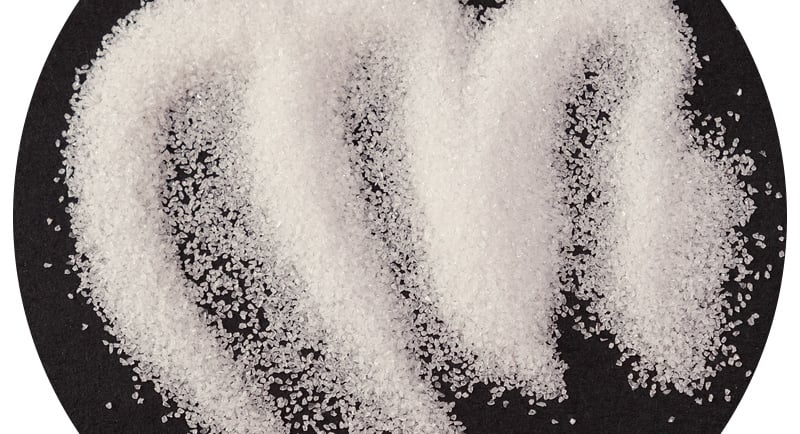
White Fused Alumina (WFA) is a synthetic abrasive produced by fusing high-purity alumina (Al₂O₃) in an electric arc furnace at temperatures over 2000°C. The result is a material that is exceptionally pure—typically 99%+ aluminum oxide—giving it a characteristic white color.
Its defining properties include:
High Hardness: Ranking 9 on the Mohs scale, it is slightly harder than black silicon carbide but less hard than diamond or boron nitride.
High Purity and Chemical Stability: The lack of impurities like iron oxide makes it inert and suitable for applications where contamination is a concern.
Friable Structure: This is its most critical feature. The crystals fracture more easily under pressure than those of brown fused alumina. This friability creates new, sharp cutting edges continuously, preventing the abrasive from becoming dull.
Why Choose White Fused Alumina for Polishing?
The unique combination of purity and friability makes White Fused Alumina an elite performer for fine finishing tasks:
Cooler Cutting Action and Consistent Performance: The friable grains microfracture during use, constantly exposing fresh, sharp edges. This prevents the abrasive from glazing over and reduces the buildup of heat, which is crucial for maintaining the temper and integrity of hardened steel tools.
Superior, Scratch-Free Finishes: Because it breaks down to a finer cutting edge continuously, WFA produces a much more uniform and finer scratch pattern than less friable abrasives. This makes it ideal for the final polishing stages, where removing the marks from coarser grits is the goal.
Chemical Purity for Demanding Applications: The 99%+ Alumina content means there is no risk of iron contamination. This is essential when working with stainless steel, titanium, or other alloys that can stain or rust if contaminated with foreign iron particles.
Versatility in Bonded Forms: It is exceptionally effective in vitrified (ceramic) bonded grinding wheels for precision tool sharpening, coated abrasive belts and discs, and as a loose grain for lapping and abrasive blasting.
Common Applications: Where Precision Matters
White Fused Alumina is the go-to abrasive for high-value finishing work across numerous industries:
Tool and Die Sharpening: It is the premier choice for sharpening high-speed steel (HSS) and carbide-tipped tools, producing a clean, sharp edge without burning the steel. Its cool cutting preserves the tool's hardness.
Fine Finishing of Hardened Steel: Perfect for grinding and polishing precision components, bearings, and gears where tight tolerances and a superior surface finish are required.
Stainless Steel and Titanium Polishing: Its iron-free composition makes it indispensable in the metal fabrication, aerospace, and medical industries for finishing critical components without causing rust or contamination.
Lapping and Precision Grinding: Used as a loose powder in slurry form for lapping applications to achieve extreme flatness and surface finish on components like valve seats and optical flats.
Woodworking: While not for rough work, it is excellent for honing the edges of planer and jointer knives to a razor-sharp finish.
White Fused Alumina vs. Black Silicon Carbide
Understanding when to use WFA over Black SiC is key to achieving the best results:
Hardness vs. Toughness: Black SiC is harder and more aggressive on non-metallic materials (stone, glass, soft metals). White Alumina, while slightly less hard, is tougher on hard metals due to its friability.
Material Focus: Use Black SiC for fast stock removal on iron, brass, aluminum, stone, and glass. Use White Alumina for precision sharpening and fine finishing on hardened steel, tool steel, and stainless steel.
Finish Quality: WFA consistently produces a finer scratch pattern and a higher-quality surface finish on hard metals than Black SiC.
How to Use White Fused Alumina Effectively
Select the Right Grit Sequence: For a perfect polish, start with a coarser abrasive (like a Brown Fused Alumina or even Black SiC) for initial shaping and then progress through a sequence of WFA grits (e.g., 220 -> 400 -> 600 -> 800) to refine the surface.
Use with Lubrication: When using WFA stones or wheels, employ water or honing oil. This reduces heat, flushes away swarf, and enhances the cutting action for a smoother finish.
Apply Moderate Pressure: Let the abrasive do the work. Its friability means excessive pressure can cause it to break down too quickly. Steady, moderate pressure yields the best results.
Conclusion
White Fused Alumina is not merely an abrasive; it is a precision instrument for the discerning craftsman. While it may come at a higher cost than Brown Fused Alumina or Black Silicon Carbide, its ability to deliver a cooler cut, a finer finish, and a contamination-free surface on the hardest steels makes it an invaluable and often irreplaceable material. For anyone serious about achieving the pinnacle of sharpness and surface quality in metalworking, investing in White Fused Alumina tools is a definitive step towards perfection.
Entering Yumo
Quality abrasive solutions for various industries.
Contact Yumo
E-mail:brian@yumowfa.com
WhatsApp/Wechat:+86 152 2508 9887
© 2025. All rights reserved.